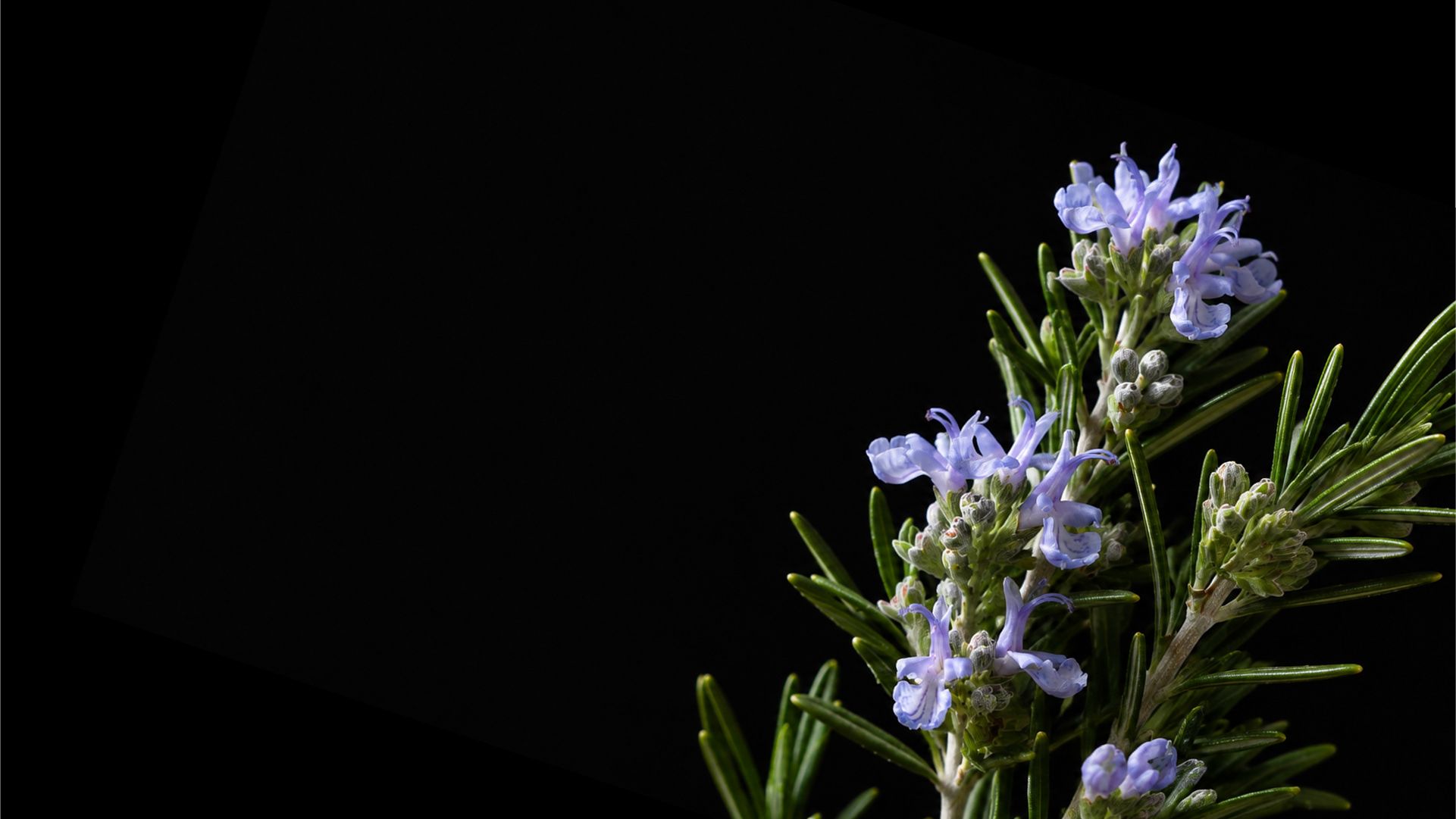
Dry Rosemary
Cineol POM
Introducing the material
Rosemary after heat, wind and time.
Gathered wild around Jebel Bargou, this cineole-rich rosemary comes from an inland landscape of limestone, exposed slopes and Mediterranean vegetation.
The plant is dried before distillation. That changes the material before extraction even begins: some immediate green freshness falls away, while herbal, woody and camphoraceous facets become denser and more pronounced.
The result is recognisably rosemary, but less culinary and less conventionally fresh. It feels drier, warmer and more textural.
The opening
A rush of cool cineolic freshness, almost electric in its clarity. Dry leaves and crushed herbs appear immediately behind it, with a faint camphoraceous sharpness.
The development
As the volatile brightness settles, the material becomes warmer and more botanical. Dried stems, aromatic woods and slightly resinous facets begin to appear, giving the rosemary considerably more body.
The drydown
Dry wood, warm herbs and a persistent thread of aromatic freshness. What began almost medicinal becomes quieter, warmer and increasingly reminiscent of vegetation heated by the sun.
The material in composition
A material that brings air, tension and structure.
Dry Rosemary can cut through dense woods, wake up resins and give aromatic compositions a sharper silhouette. Against florals, it can introduce something drier and less predictable.
In smaller amounts it becomes structure: freshness without citrus, dryness without heaviness and a cool aromatic line that can run through an entire composition.
The origin of the material
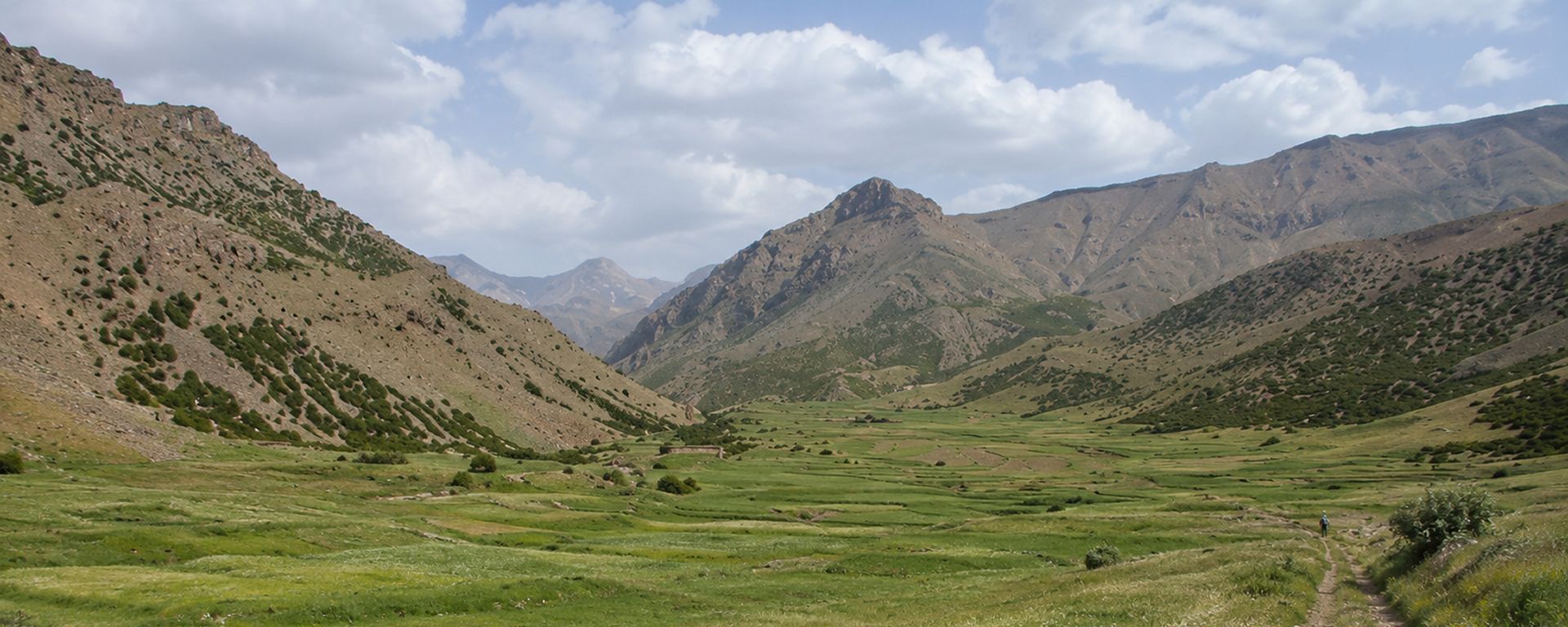
Wild rosemary from Jebel Bargou.
Jebel Bargou rises through an inland region between Siliana, Oueslatia and Kairouan, reaching approximately 1,266 metres at its highest point. Rosemary grows naturally across the rocky limestone landscape alongside other aromatic Mediterranean vegetation.
The plant is harvested wild, dried and later steam-distilled. Three olfactory evaluations are carried out as the extraction develops.
Different volatile fractions emerge over time, so the process becomes partly curatorial: searching for the point where freshness, aromatic body and dryness meet.
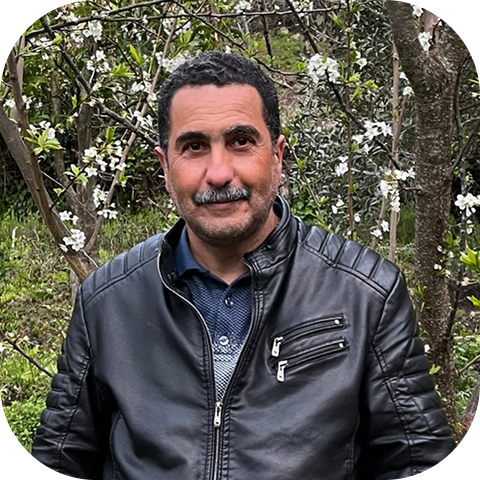
Wajdi Saidi
Distillation Operator
Wajdi Saidi is our Tunisian partner, coordinating its forest and agricultural projects across the region. He works closely with local growers, harvesters and production teams to connect each material with the landscape, people and practices behind it.
- Botanical name
- Rosmarinus officinalis ct. cineol
- Material & parts
- Wild, fried flowers & leaves
- Location
- Djbel Berguo, 36.032770, 9.676484
- Distillation temp & time
- 18–27°C, 70-150 min
- Steam system
- Advanced and internally developed distillation