
Echoing olfactive vision through design
Interviews with Pearfat Parfum, AFOWER, and Miskeo
Mar 03, 2026
Saman Elyass
— Founder & CEO
When I was younger, I never thought about why certain products appealed to me. I bought things because they were useful or necessary.
When I was younger, I never thought about why certain products appealed to me. I bought things because they were useful or necessary.
But later, working in sales and marketing, I noticed something interesting: brands selling everything from soda and candy to shampoo and perfume often outperform competitors simply because of design.
Good design communicates instantly. It can draw from minimalism, maximalism, art deco, contemporary art… anything that captures the eye and creates a feeling, and a relation.
In perfumery, this phenomenon is especially visible in the designer and luxury niche categories, where brand identity, packaging, and bottle design are carefully crafted.
In artisanal perfumery, however, the focus is often different. The emphasis tends to be on the juice itself, the materials, the composition, the olfactory story, rather than the visual presentation.
So this raises some questions.
Do artisans value design less?
Is it simply a matter of budget?
Or is design still an untapped tool in independent perfumery?
In this article, I speak with three perfume houses known for their distinct visual identities. Some of the perfumers also work as designers or art directors themselves.
Their perspectives show how design can act as an extension of the fragrance, a way of translating the feeling of a perfume into a visual language.
Because sometimes, the bottle is the first note people experience.
What role does design play in your brand, and how does it echo your olfactive vision?What role does design play in your brand, and how does it echo your olfactive vision?
Alie Kiral, Owner
— Pearfat Parfum US
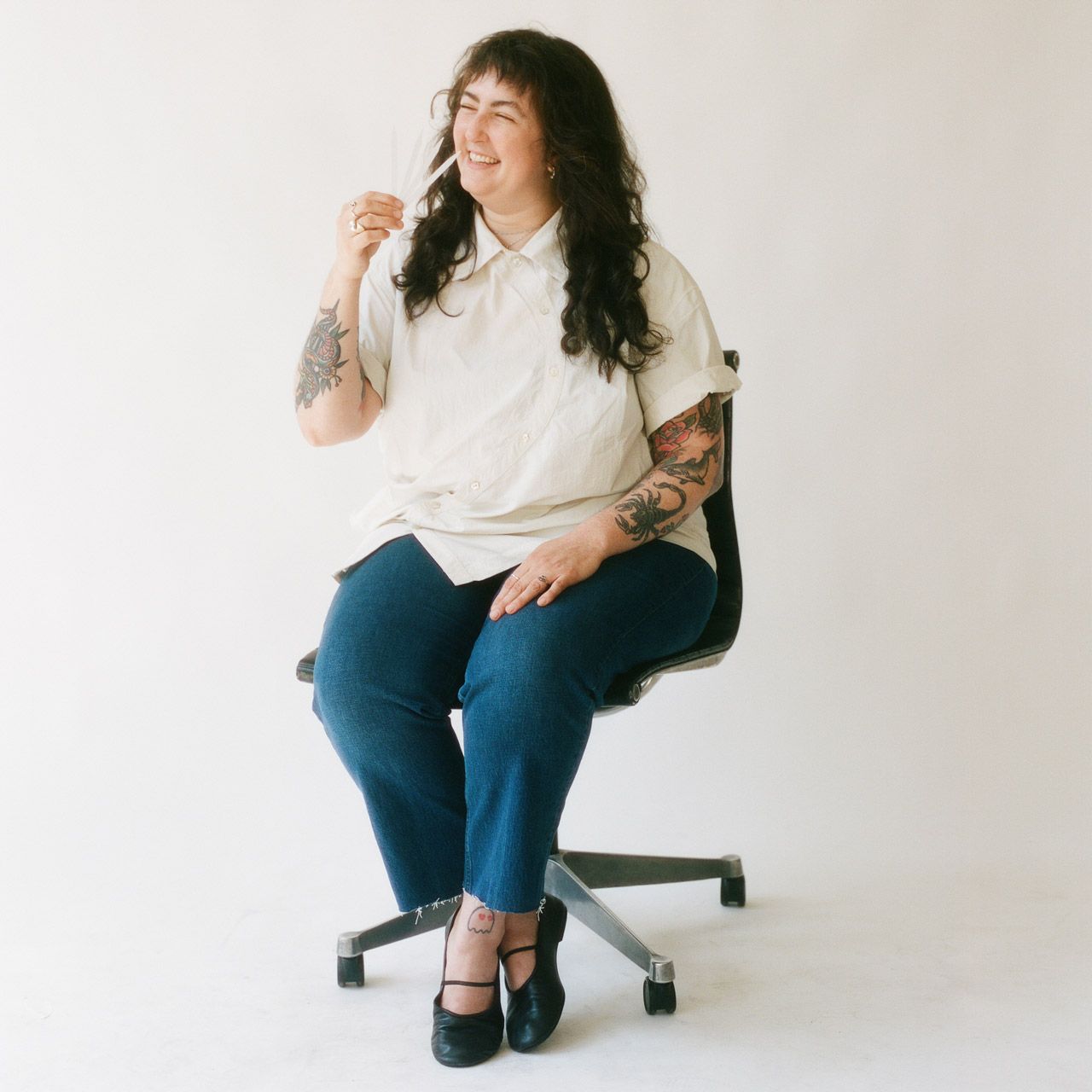
“The look and feel of Pearfat are intended to mimic the DIY spirit of the brand.
Pearfat is very proud to be handmade every step of the way, so I am always seeking the perfect balance of fun, playful, and accessible while also communicating quality and care.
I grew up making zines and have always been into the aesthetics of riot girl, punk rock, and outsider art - all of these things factor heavily into Pearfat's visual language, as well as the perfumes I create.”
Matt Lafferty, Owner
— AFOWER UK
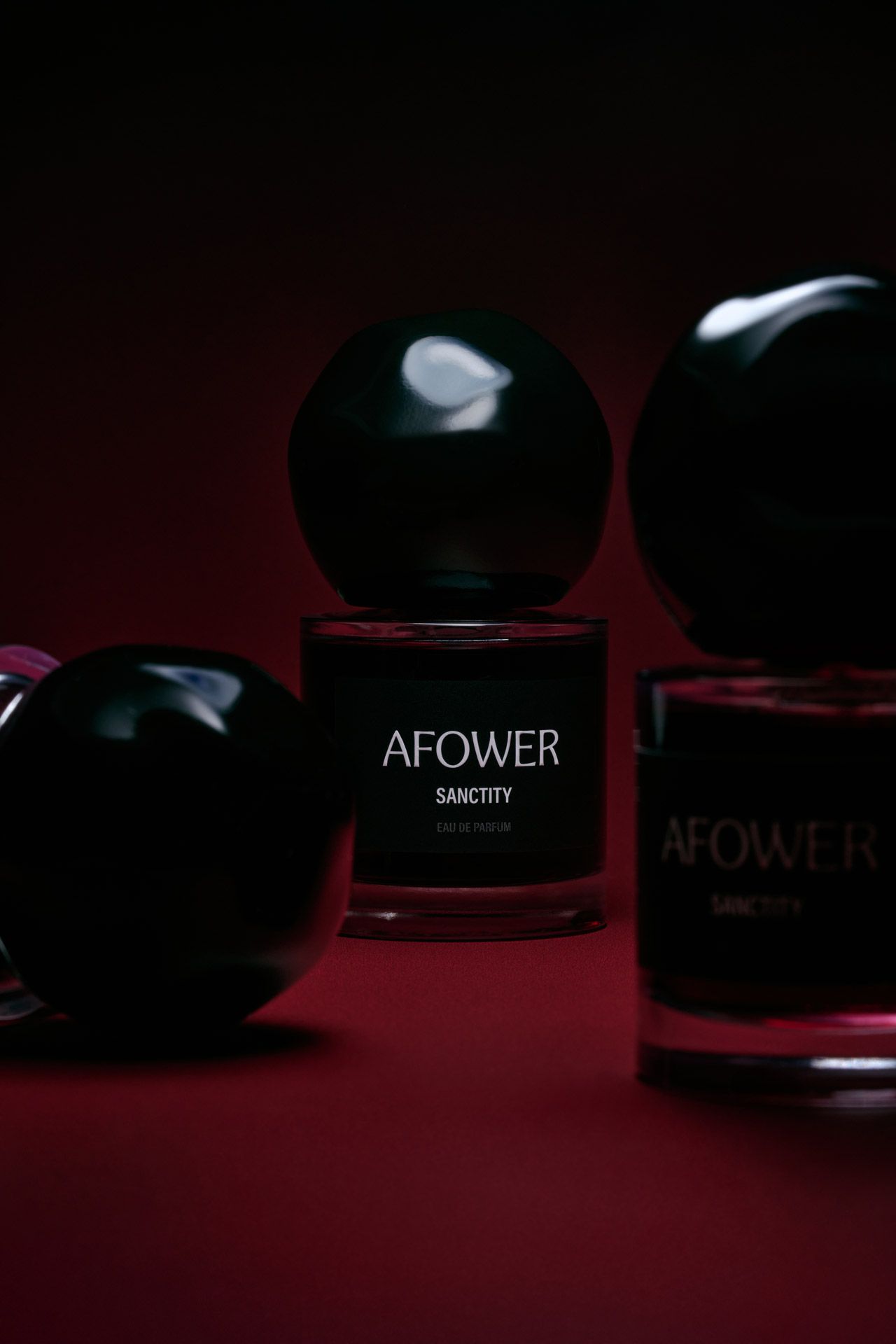
“Design plays a central role in AFOWER. At its heart, the brand reflects the idea that we are all imperfect and constantly evolving, shaped as much by our flaws as by our strengths.
This thinking guided the design of our bottle closure. We wanted something that felt personal and expressive, with subtle nuances across the surface that mirror the emotional highs and lows we experience. Rather than pursuing flawless uniformity, the object embraces individuality and character.”
Marie-Pierre Blanchette, Owner
— Miskeo DE
“I don't know if I'm a conceptual thinker because of my background in design or if I became a designer because of it (most likely), but it sure has been my approach to my creative practice. I always start with an idea/concept first, then imagine how it can be translated in the sensing world.
For my branding, I wanted to represent the act of creating scent - akin to being an alchemist or a magician, and I wanted to refer to this kind of aesthetic in the branding and visual universe of our first collection without being too obviously 'witchcore': for example the choice of muted colours, using a serif font for the logo, or the textural cardboard in our packaging. Even the choice of our name 'MISKEO' refers to that idea, coming the latin misceō - to blend, to mix, to join.”

Do your perfumes reflect particular visual or cultural design styles? And how do these influences shape your bottle design, packaging, and overall brand identity?
Alie Kiral, Owner
— Pearfat Parfum US
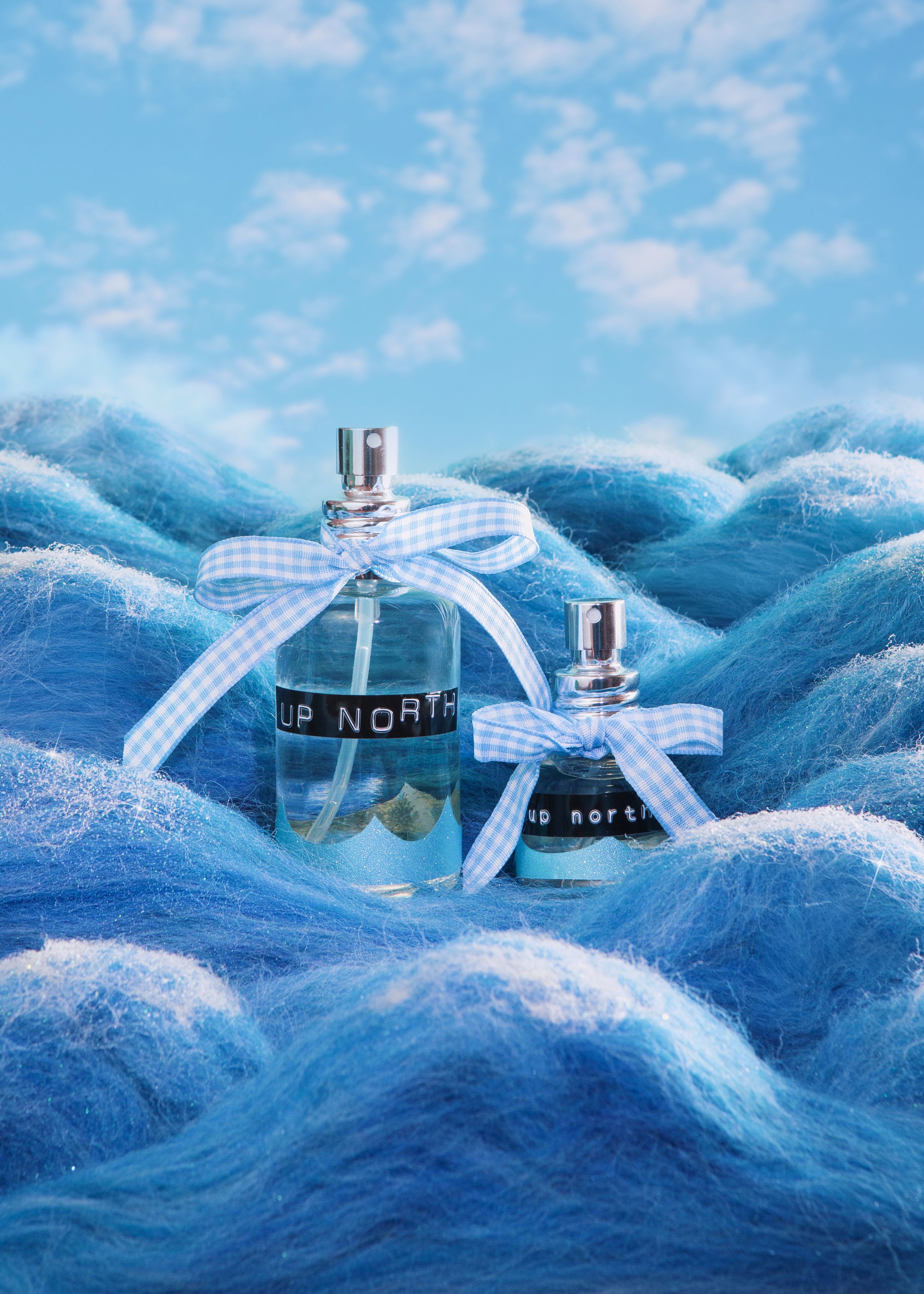
“Pearfat's primary visual references come from maximalist design, surreal art, boundary-pushing cinema, queer culture, and elements with meaning from my personal life such as midwestern plant life and playing pinball. I love these influences to be very apparent in my overall branding, while also keeping my bottles and packaging simple to allow the wearer to insert themselves into the scent narrative.
I approach my perfumes as little olfactory love poems, and while they are very personal to me in particular, I think a simple bottle with a handmade label allows my customer to create their own associations and memories with my scents.”
Matt Lafferty, Owner
— AFOWER UK
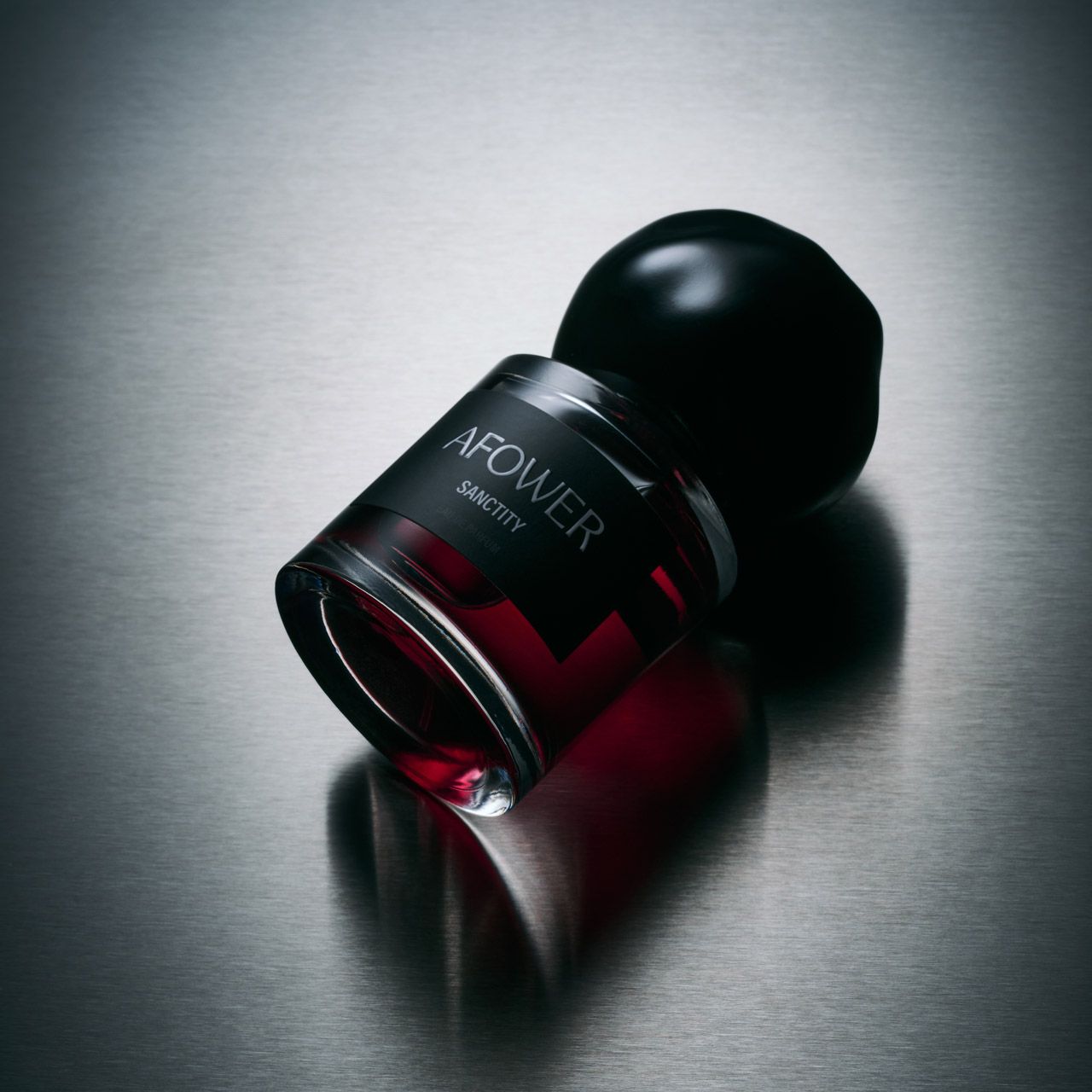
“Design plays a central role in AFOWER. At its heart, the brand reflects the idea that we are all imperfect and constantly evolving, shaped as much by our flaws as by our strengths.
This thinking guided the design of our bottle closure. We wanted something that felt personal and expressive, with subtle nuances across the surface that mirror the emotional highs and lows we experience. Rather than pursuing flawless uniformity, the object embraces individuality and character.”
Marie-Pierre Blanchette, Owner
— Miskeo DE
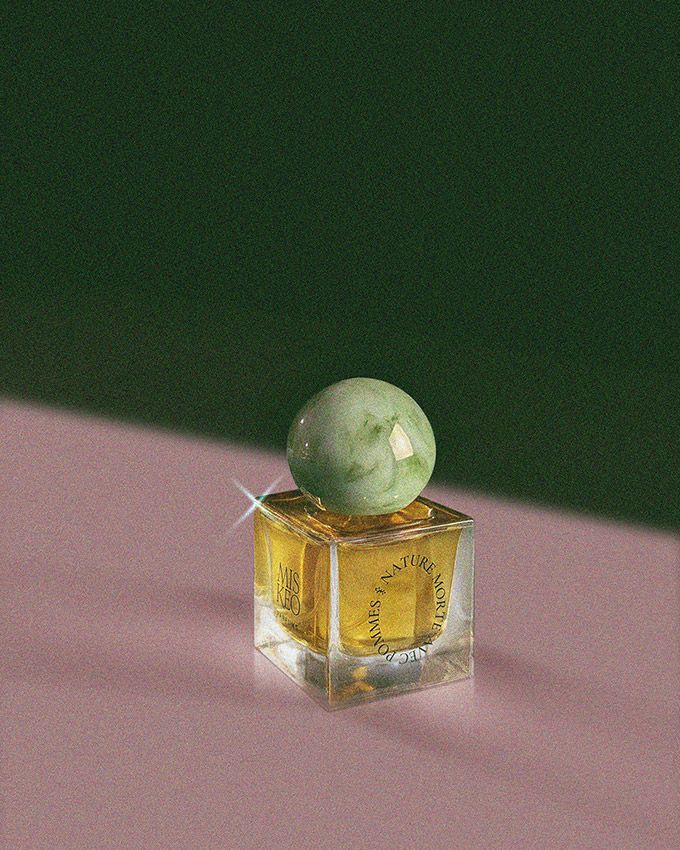
“I conceptualized each perfumes from our first collection Les Éléments as symbols - standing for immaterial or fleeting moments of life, and I created a sort of 'sacred geometry' system to visualize these ideas. I reused the same system of shapes (square, circle) when deciding on the bottles and caps. Of course my bottles and caps are not unique - the access to packaging is super limited as a small indie perfumer, but at least my choices are rationalized by the overall art direction and not just randomly chosen because of trends.
For the Rococo collection, I decided to extend the usage of shapes but this time using typography - a direct reference to the Rococo-era booming printing industry and its creativity, without which the modern design practice wouldn't be the same. The typography shapes I'm using for Rococo can also be conceived as 'frames' (like a painting frame), echoing the names I chose for each perfumes as they sound like they could have been the names of Rococo-era paintings.”
What advice would you give, to new artisans or up & coming perfumers that want to start putting effort into brand identity?
“Branding should feel authentic to you - forget about trends and what other brands look like! Spend time answering these questions before defining your 'look & feel': Why do you do what you do, what's your mission? Why is it important to you, what values your brand stand for? What is your approach to your craft? What makes your brand unique, what qualities does your brand embody?”
Marie-Pierre Blanchette
— Miskeo DE
“My advice is that perfume should always be the point of what you're doing. Having a clear story for your perfumes that comes from an honest, authentic place will always serve you well. Fancy packaging and flashy launches can be a fun part of running a perfume brand, but at the end of the day, creating a compelling fragrance that feels true to you as a perfumer is objective number one.”
Alie Kiral
— Pearfat Parfums US
“I’d say envision the world you want your creations to live in before anything else. Once that’s clear, the product has somewhere to belong - it feels necessary.
And don’t chase perfection.”