Design: Shape as identity with Neandertal
Interview with Kentaro Yamada, founder & creative director of Neandertal.
July 22, 2026
Polaris Olfactive
This article is part of a series where we highlight shape as identity in the design stages of a perfume bottle.
This time, we have: Neandertal, from the UK. The interview includes Kentaro Yamada, founder & creative director of the brand.
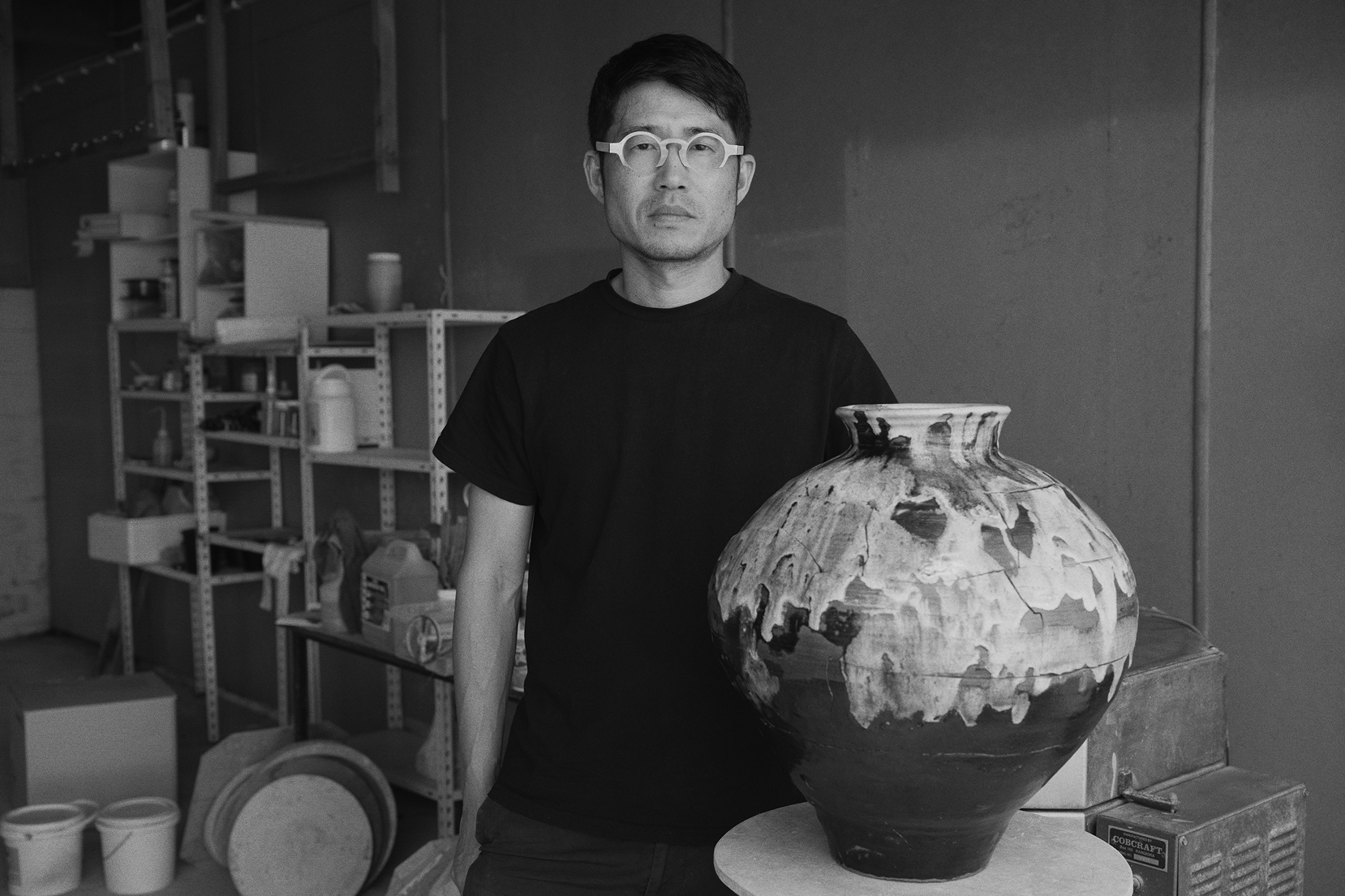
Neandertal is a independent perfume house from the United Kingdom. The founder, Kentaro Yamada, is probably my favourite artist. He’s very genuine, experienced and simply breathes art. Kentaro has been awarded for his works numerous of times, has a masters of art and public collections at museums, galleries and more. With an extensive exhibition background from 2007-2020, Kentaro has all the accolades.
I’ve met Kentaro twice, once at Polaris Olfactive Week in 2025, and also in the UK at a private gathering. To sum it up: You can never go wrong with Kentaro. Super charismatic and funny. I like funny people.
Kentaro, I must say I’m very honored to interview you. Your bottles carry a different dimension and the concept is totally unique. How did your brand emerge from a design point of view – and how did elements like form, weight, and closure shape that identity from the beginning?
Kentaro Yamada
— Neandertal UK
“Before scent, shape, or even the name, I was driven by the idea of how we, as subjective beings, occupy a vast timeline. This led me to research Neanderthals, an intelligent yet often overlooked species that lived far longer in Europe than Homo sapiens. I spoke with academics at The University of Cambridge to better imagine their worldview and their possible encounters with early modern humans.
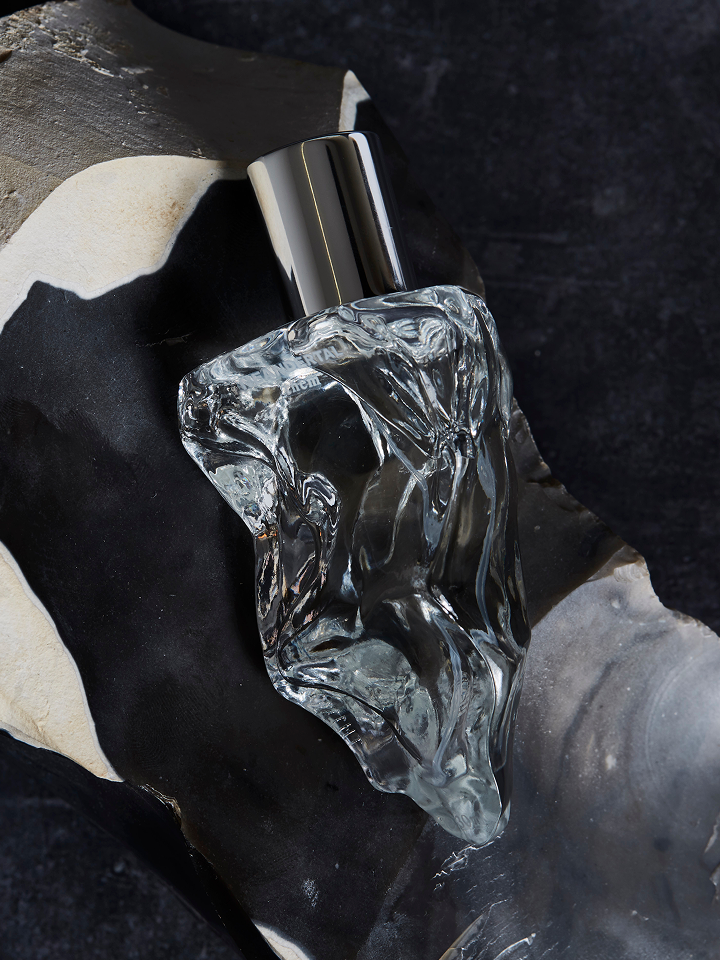
The design identity emerged through the research process. I worked in Norfolk with a flint knapper, creating hand axes from local flint, forms historically used by hominins, including Neanderthals. The weight, form and even the logic of the closure all derive from this object. It is a shape refined over hundreds of thousands of years, one that naturally fits the human hand because, in a sense, we evolved alongside it.
From there, I began to imagine a fragrance that could hold this tension: between past and present, shadow and clarity. A scent that challenges the cliché of the Neanderthal as primitive, and instead presents something contemporary, complex and sophisticated, perhaps even more so than what we associate with Homo sapiens today.”
At what point did the bottle stop being packaging and become part of the fragrance itself?
“As an artist, I am interested in our subjective minds – why do we like one colour, shape, or scent over another, and how we created ways to evaluate tastes over time in history. The shape of the handaxe was refined over a million years of human history, and it is as ancient as it is contemporary.
I worked with the perfumer Euan McCall on the first fragrance with a similar idea of creating something universal, contemporary, and something that has elements of past and future. Our current six different scents are highly original, but unlike what many might imagine, they do not attempt to emulate the limited understanding of olfactory context attributed to Neanderthals. Instead, they explore the full range of possibilities of what such a species could have become and where we, as human beings, stand alongside it, and the possibilities for future.
With this shape and fragrance, I wanted to put forward a case to think about what it means to be a subjective being, and how we as humans, shape our realities with objects and scents using earth’s material.”
Dark by Neanderthal. –>
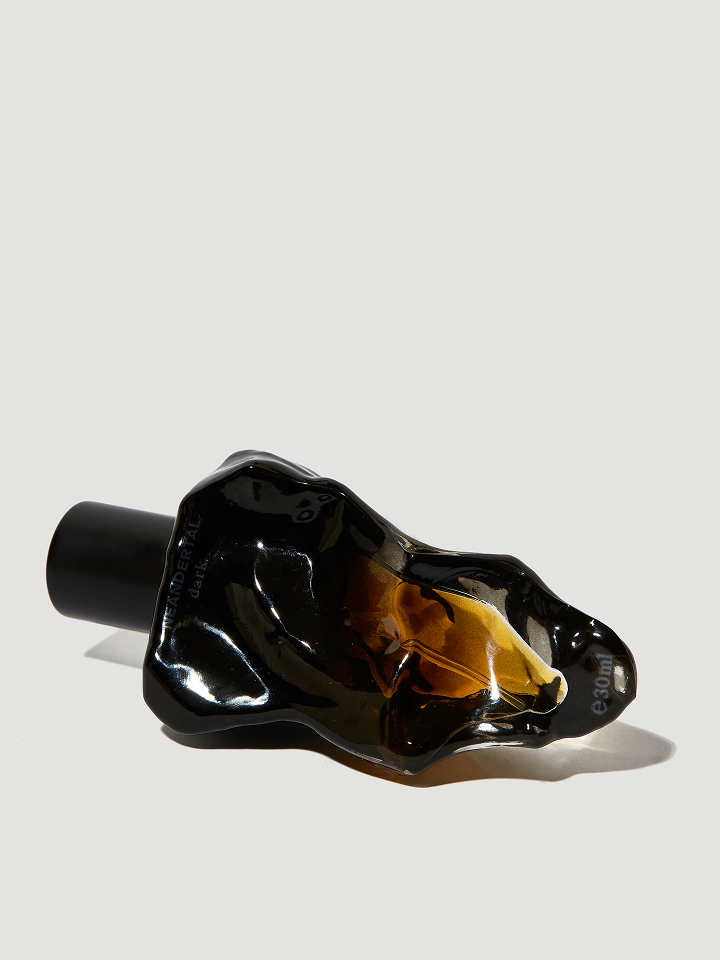
Did the form come before or after the scent – and what did you choose to remove along the way?
“At the heart of it all, before any shape or scent, was the intention, a quest to communicate something deeply human. I wanted to prompt us to reflect on why we’re here – our collective existence. In that light, whether form or scent came first is secondary, they were the means to deliver that essential idea. Everything that remained served that purpose.”
If all branding were removed, would the shape alone still belong to your house?
“Our bottle shapes come from something shaped by all of humankind over more than a million years, so it’s not something anyone owns – it’s collectively shared.
What’s fascinating about this shape is that we find it beautiful – perhaps because, as a species, we’ve been looking at it for so long and evolved alongside it. The shape is neither ancient nor contemporary, it is timeless.
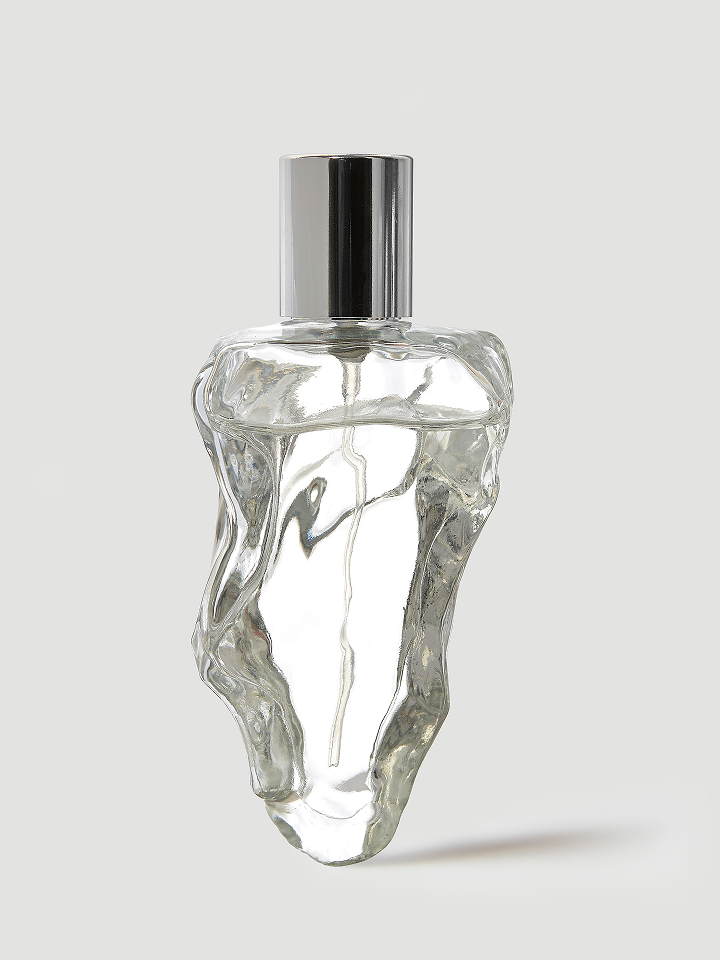
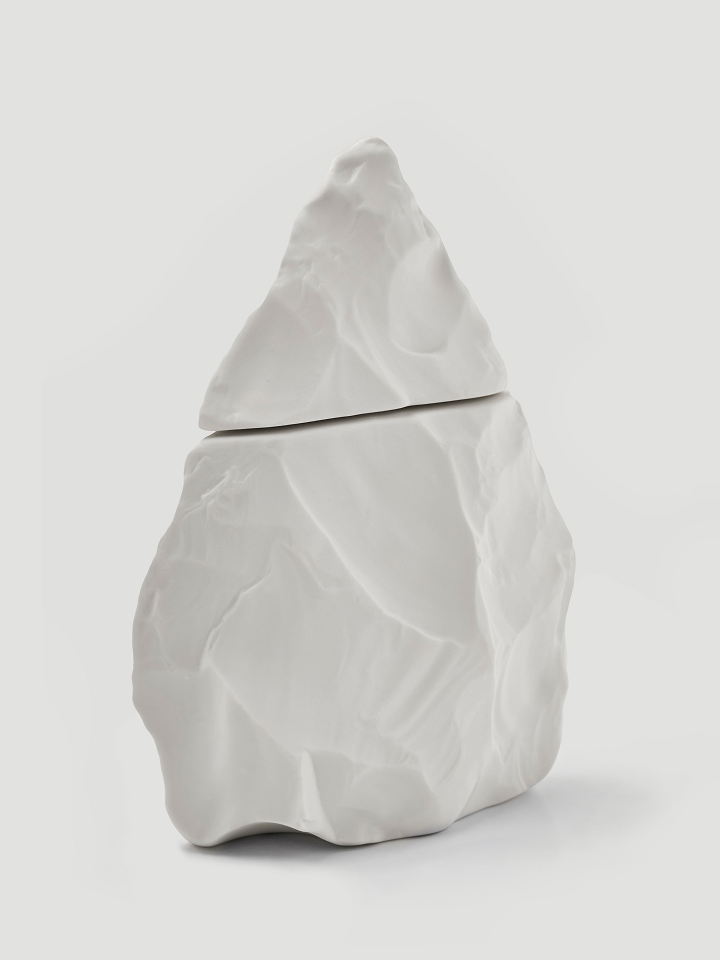
We offer two different bottles: a 90 ml ceramic bottle and a 30 ml glass bottle. The processes behind their creation are rooted in historical and archaeological evidence, as well as living craft traditions such as flint knapping, bringing the perfume bottle close to its ancestral tool form. In this case, however, it is a tool to carry our fragrance.
Our handmade 90 ml ceramic bottles are individually produced using slip casting. The glass bottle, on the other hand, is developed using digital tools: we 3D scan and render the form before realising it in glass.”
What should someone feel the moment they see and hold the bottle – before experiencing the scent?
“It’s not about dictating what anyone should feel, but I hope when they hold it, they sense a connection, something shared by human hands across time. Perhaps it makes them reflect on what it means to be human, a link to people that are living now, or people from the past, the future, or even the AI. I hope it stirs that reflection, and the scent deepens that exploration. Ultimately, my hope is that people truly and genuinely recognise the importance of art and its integrity, from concept to bottle to fragrance. Every element, including its quality, needs to be just perfect.”